
Injection molding does not treat every surface equally.
Some faces are structural. Some are hidden inside the product. Some only exist to support ribs, bosses, clips, or fastening features.
And then there is the Class A surface: the face the customer sees, touches, photographs, and judges. That surface should drive the pull direction.
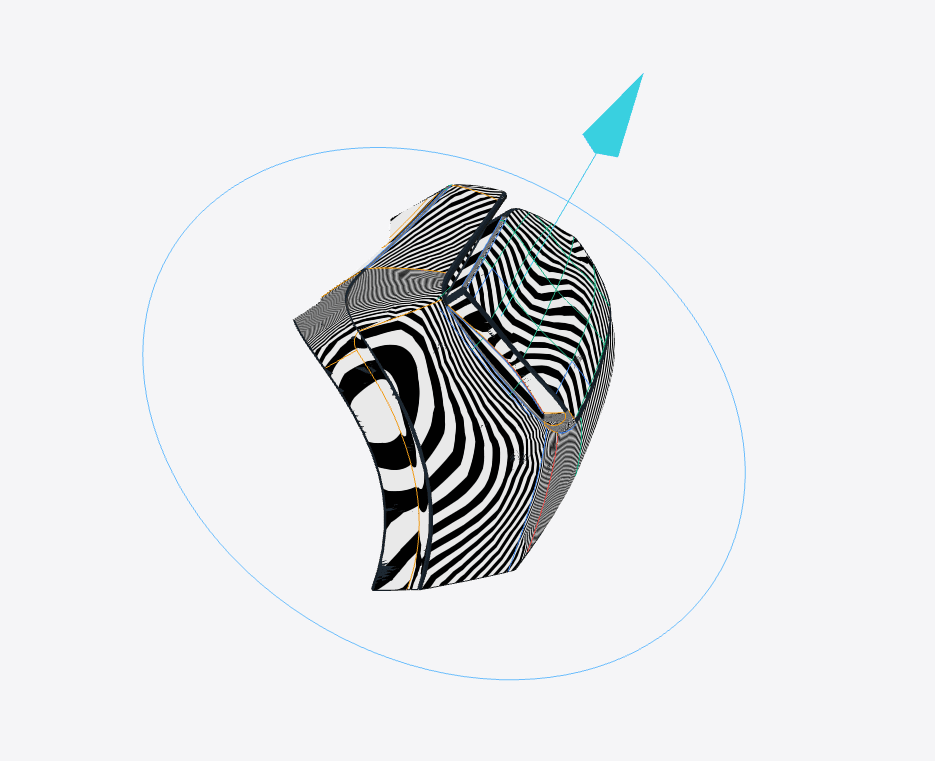
Quick Answer: Class A Should Lead Pull Direction
In injection molding, the Class A surface is the visible cosmetic surface of the part. The pull direction is the direction the mold opens to release that part.
The best pull direction is often the one that protects the Class A surface first, because that direction determines where draft compromises, undercuts, parting-line risk, and ejection scuffing are most likely to appear.
Pull Direction Is an Aesthetic Decision
Pull direction sounds like a tooling constraint, but it also decides where the part looks cleanest. Once the mold-opening direction is chosen, every face is evaluated relative to that axis.
Faces aligned well with the pull direction can release cleanly with less surface drag. Faces that fight the pull direction need more compromise: more draft, moved parting lines, side actions, or geometry changes that can leave visible consequences.
That is why the most important question is not just "Can this part be molded?" It is "Which surface should the mold protect?"
What Class A Really Means
Class A surfaces are the cosmetic, user-facing regions of a part. On a consumer product, that might be the outer shell. On an automotive interior component, it might be the visible trim surface. On a medical device enclosure, it might be the smooth surface a clinician holds.
These surfaces carry different expectations. They often need cleaner texture, more controlled draft, fewer witness lines, and less risk of scuffing during ejection.
If the pull direction is chosen without respecting Class A, the tool may still work, but the wrong region pays the visual cost.
How the Pull Direction Shapes What Looks Best
A molded part releases by separating from steel along the mold-opening axis. Geometry that opens cleanly along that axis is easier to protect cosmetically. Geometry that leans against that axis is where problems concentrate.
The selected pull direction influences:
- where draft is easiest to satisfy, especially on broad visible faces
- where parting lines are likely to land, which can affect the visible silhouette
- which faces risk drag or scuffing as the part separates from the mold
- which features become undercuts and may require side actions or redesign
In practice, the same physical part can have different aesthetic outcomes depending on the pull direction. One axis may protect the hero surface. Another may protect a hidden interior wall while forcing compromises onto the customer-facing face.
How Odin Uses Class A to Choose the Pull Direction
In the previous article, Geometric DFM for Injection Molding, we explained the technical pipeline: Odin takes a designer-selected Class A region, studies the outward face directions, and searches for the pull direction that gives the weakest face the best possible draft outcome.
The important idea is simple. Odin does not average the part and hope the visible surface survives. It treats the selected Class A region as the region to optimize around.
For each candidate pull direction, Odin scores the relevant faces against that direction. A face that releases cleanly scores well. A face that creates an undercut scores poorly. The best pull direction is the one that makes the worst Class A face as good as possible.
That minimax logic matters because aesthetic quality is often limited by the worst visible face, not by the average of all faces. A product does not look premium because most surfaces released cleanly. It looks premium when the obvious surfaces avoid obvious compromises.
Why the Class A Pick Should Happen Early
Teams often wait until supplier review to ask tooling questions. By then, the industrial design, mechanical layout, fastening strategy, and visible surfaces may already be locked.
That creates a familiar late-stage tradeoff: preserve the cosmetic surface and rework internal features, or preserve the internal features and accept visual risk on the surface the customer sees.
Selecting Class A early makes the tradeoff explicit. It tells the DFM system which faces deserve priority before draft, undercut, wall-thickness, and parting-line decisions become expensive.
A Simple Way to Think About It
Imagine holding the part and choosing the side that must look pristine. That is the surface you do not want to scar with avoidable manufacturing compromises.
Now imagine the mold opening in different directions. Each direction asks a different question of the geometry: which faces release easily, which faces need more draft, and which faces trap the part?
Odin turns that visual judgment into a geometric check. You choose the Class A surface. Odin derives the pull direction from the CAD geometry, then evaluates the rest of the part against that decision.
From Aesthetic Intent to DFM Findings
Once the pull direction is known, Odin can classify faces relative to the mold opening. Draft violations, undercuts, and side-of-mold context become tied to the aesthetic choice the designer made at the beginning.
That creates a better conversation between design and manufacturing. Instead of a supplier saying "this face has a draft problem," the team can see whether the problem threatens Class A, affects a hidden surface, or belongs on a feature that can be redesigned without hurting the product's appearance.
The finding becomes more than a red highlight. It becomes a decision record: this was the Class A intent, this was the computed pull direction, this face failed the standard, and this is where the compromise would show up.
Frequently Asked Questions
What is a Class A surface in injection molding?
A Class A surface is the visible, cosmetic, customer-facing surface of an injection molded part. It usually has stricter appearance requirements than hidden ribs, bosses, clips, or internal walls.
Why does Class A surface selection affect pull direction?
Class A selection tells the DFM system which surfaces should be protected when choosing the mold-opening direction. A different Class A selection can produce a different preferred pull direction and move draft or undercut risk to different geometry.
How does Odin use the selected Class A surface?
Odin uses the selected Class A region to compute a pull direction, then evaluates draft angles, undercuts, and release risk against that direction. This ties each manufacturability finding back to the surface the designer intended to protect.
Try Odin to make pull direction part of your design review:
Upload your CAD, pick the Class A surface, and Odin derives the pull direction before checking draft angles, undercuts, and thin-wall risks across the part.
Try Odin Free →Want the technical version of the algorithm? Read how Odin computes pull direction, draft, and undercut findings.
Want the manufacturing background first? Start with Draft Angles in Injection Molding.